
Approved vs. Built: Why You Don’t See Cranes in Guelph’s Sky Right Now
If you have been following local news over the past year, you have likely seen glowing press releases from City of Guelph Staff and Council highlighting impressive unit approval numbers. Headline figures suggesting hundreds or thousands of new homes on the horizon give the impression that a major residential building boom is underway across the Royal City.
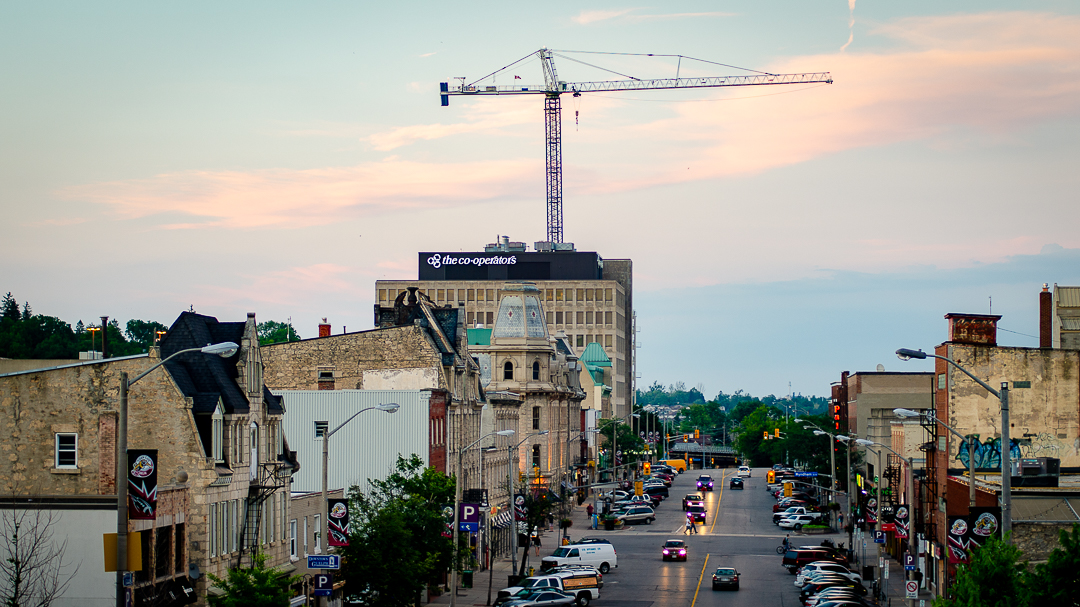
However, if you take a drive down Gordon Street, head through Downtown Guelph, or navigate around Victoria North, you will quickly notice a glaring gap between official municipal announcements and real-world construction site activity: there are almost no construction cranes in the sky.
Why does headline municipal approval data differ so dramatically from actual shovels in the ground? Understanding this gap is essential for evaluating local housing supply, and making grounded real estate decisions in Guelph right now.
The Reality of Guelph’s 2026 Housing Starts
According to recent CMHC (Canada Mortgage and Housing Corporation) data covering January through August 2026, the actual number of new housing starts in Guelph tells a remarkably quiet story:
- Semi-Detached: 34 units
- Single-Detached: 16 units
- Townhouses: 3 units
- Apartments: 29 units
That brings the total to just 74 new residential homes starting construction across Guelph over the first eight months of the year.
For a vibrant community of over 140,000 residents facing provincial growth expectations, 74 actual starts represents a fraction of what headline approvals might suggest.
A Note on Accessory Dwelling Units (ADUs): These figures do not include municipal permits issued for Accessory Dwelling Units, such as basement apartments or backyard units. While ADUs add secondary options, they are rarely an occupant’s primary preference. Instead, they typically function as the absolute bottom rung of the rental housing ladder rather than long-term, primary family housing solutions.
Approval vs. Execution: The Planning Paper Trail
The primary reason for the mismatch between press releases and physical construction lies in what local officials consider an “approved unit.”
When Council approves a project, it often simply means a developer has successfully obtained a preliminary Zoning By-law Amendment for a conceptual plan. That zoning approval is merely an early hurdle in a multi-year development process, not a guarantee that a structure will ever or can ever be built.
Once a conditional zoning amendment is secured, builders begin the complex process of detailed site design. At this stage, various municipal regulations and site limitations start reshaping, and frequently shrinking, the proposed plans:
- Setbacks and Step-Backs: Strict zoning rules control how close a building or buildings can sit relative to the street or property lines, reducing the total footprint.
- Infrastructure Requirements: Mandatory allocations for vehicle parking, bicycle parking, amenity spaces, and garbage container storage consume substantial ground area and floor space.
- Height & Engineering Limitations: Height restrictions and underground soil/ground conditions dictate how high a building can go, how much of the site it can sit on and how many units per floor are structurally feasible and commercially viable.
By the time a proposal completes this lengthy technical review, the final unit count is almost always lower than the ambitious figures originally celebrated in initial zoning announcements.
Capital Flight and the Municipal Regulatory Environment
When developers navigate an overly prescriptive, highly rigorous, and time-consuming municipal approval process, another subtle shift occurs: capital re-allocation.
Building projects require massive upfront financial capital, specialized staff resources, and construction financing. In a complex regulatory environment where approvals drag on over several years, developers may choose to pause or delay local projects.
Instead of waiting out protracted, and at times uncertain approval cycles in one city, developers reallocate their capital, project financing, and personnel toward municipalities where projects can be brought to market faster and with less friction. This capital flight leaves local sites sitting empty for years while builders focus their resources elsewhere.
The Financing Barrier and Local Inventory
Even if a builder successfully navigates every planning requirement, secures all approvals, and keeps their capital in Guelph, they face one final critical challenge: securing construction funding and finding buyers.
Lenders require strong pre-sale numbers before issuing construction loans for condominium projects. Yet, as of August 31, 2026, CMHC data shows 184 Unabsorbed Units sitting in Guelph’s inventory (completed homes or condos waiting for buyers or tenants). With existing new-build inventory sitting unabsorbed, lenders are cautious, and developers cannot justify breaking ground on new multi-family developments.
What This Means for Real Estate in Guelph
For homeowners, buyers, and investors navigating Guelph real estate today, these dynamics paint a clear picture:
- Paper Approvals Aren’t Physical Homes: A high number of municipal approvals does not translate into immediate market supply. Real physical inventory remains tightly constrained, as evidenced by only 74 starts through August.
- Capital Efficiency Drive Development: When regulatory hurdles increase local costs and timelines, investment capital moves to path-of-least-resistance markets, prolonging local supply shortages.
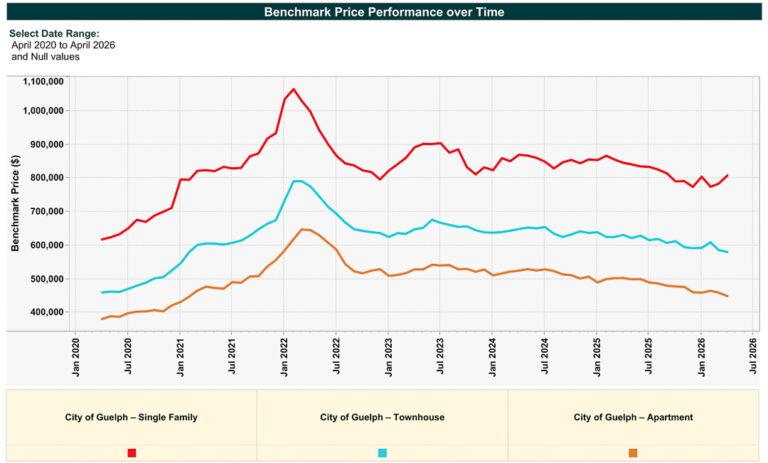
- Existing Supply Context: The 184 unabsorbed units show that buyers remain sensitive to current market pricing and interest rates, requiring strategic positioning for anyone selling or re-assigning units today.
Understanding the distinction between political press releases and actual construction starts allows us to evaluate local market health with clarity. As someone who has watched Guelph evolve over decades—from the historic industrial core in St. Patrick’s Ward to expansion across Victoria North—I believe advocating for streamlined, practical supply-chain improvements in local housing is essential for keeping our community accessible, vibrant, and well-housed.